
CUSTOM DESIGN & EMBROIDERY • HANDCRAFTED PREMIUM KIPPAH • CUSTOM MADE FOR WEDDINGS & BAR MITZVAH • SPECIAL PRICING FOR BULK ORDERS
Kippah vs Yarmulke vs Yamaka: What’s the Difference?

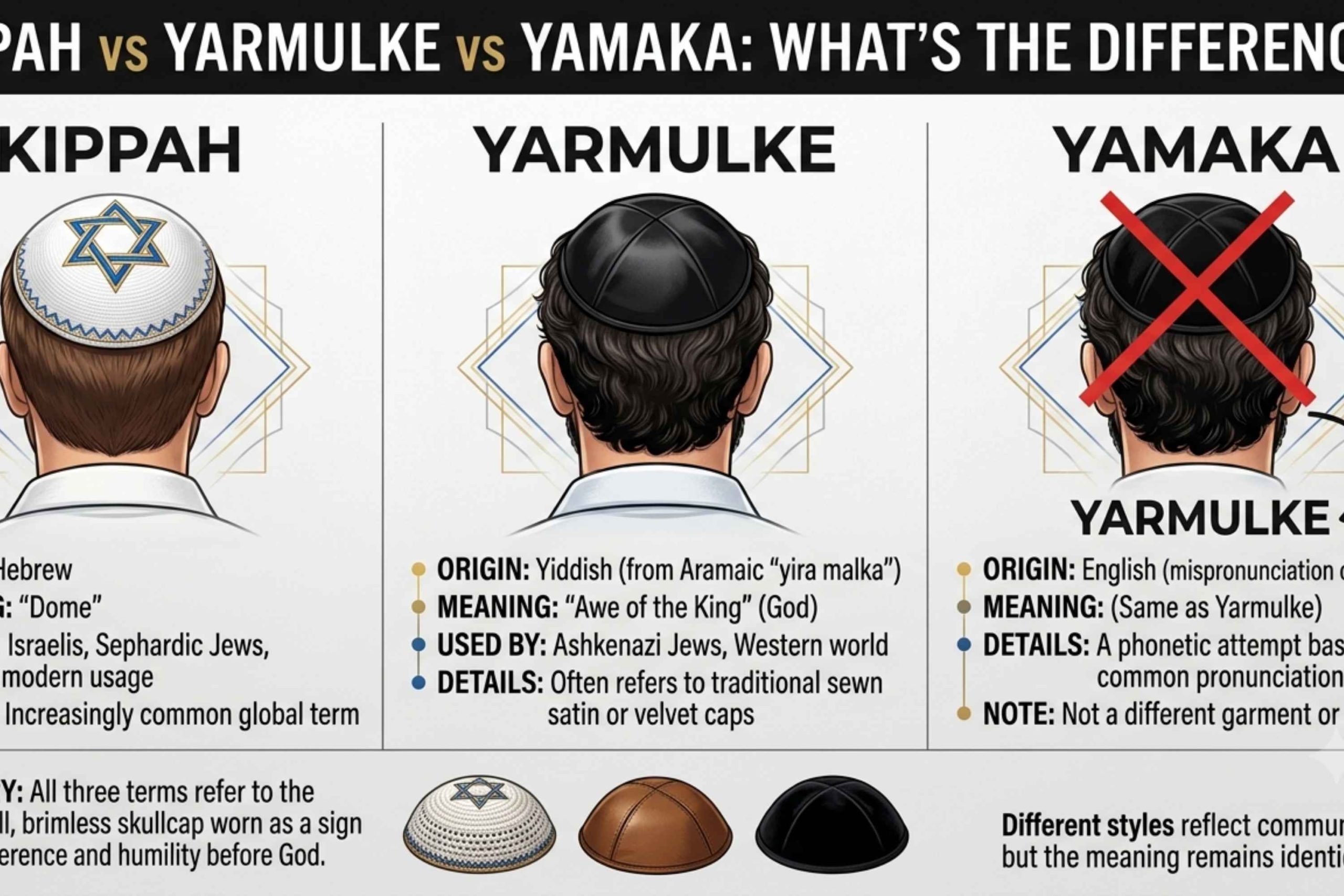
Kippah, yarmulke, and yamaka are different names commonly used to describe the traditional Jewish head covering worn by many Jewish people around the world. Although these terms may appear different, they generally refer to the same type of religious and cultural item. This traditional Jewish head covering represents respect, humility, and connection to faith and tradition.
Understanding the difference between kippah, yarmulke, and yamaka can help you learn more about Jewish customs, the meaning behind this important tradition, and the different styles available today.
At KippahCraft, we create premium custom kippahs and personalized designs for weddings, Bar Mitzvahs, special events, and organizations, combining traditional craftsmanship with modern customization.
What Is a Kippah?
A kippah is a traditional Jewish head covering worn by many Jewish men and, in some communities, women. The word “kippah” comes from Hebrew and means “covering” or “dome.”
The kippah is worn on the head as a symbol of respect, humility, and awareness of a higher presence. For many Jewish people, wearing a kippah is an important expression of religious identity and connection to Jewish tradition.
Kippahs are commonly worn during:
- Prayer services
- Religious ceremonies
- Jewish holidays
- Weddings
- Bar and Bat Mitzvah celebrations
- Community events
Today, kippahs are available in many different materials, colors, and designs. While traditional styles remain popular, many people choose personalized kippahs with embroidery, names, dates, or custom designs.
What Is a Yarmulke?
A yarmulke is another name for the same traditional Jewish head covering.
The term “yarmulke” comes from Yiddish, a language historically spoken by many Jewish communities in Eastern Europe. The word became widely used in English-speaking Jewish communities, especially in North America.
In everyday conversation, people often use:
- Kippah
- Yarmulke
- Jewish skull cap
to describe the same item.
The main difference is not the object itself but the language and cultural background behind the word.
For example:
- Hebrew speakers may use the word kippah
- Yiddish-speaking communities may use yarmulke
- English speakers may use either term
What Is a Yamaka Hat?
A yamaka hat is a common English spelling variation of “yarmulke.”
Many people search online for “yamaka” when looking for information about Jewish head coverings. Although “yamaka” is not the original Hebrew or Yiddish spelling, it is a widely recognized term used in English-speaking countries.
The words:
- Yamaka
- Yarmulke
- Kippah
usually refer to the same traditional Jewish head covering.
When searching for a Jewish head covering online, customers may see many variations including:
- Jewish kippah
- Jewish skull cap
- Yamaka hat
- Yarmulke hat
- Kippah cap
These terms describe the same general category of traditional headwear.
Kippah vs Yarmulke vs Yamaka: Are They Different?
Although the names are different, there is usually no major difference between a kippah, yarmulke, and yamaka.
| Term | Meaning | Origin |
|---|---|---|
| Kippah | Traditional Jewish head covering | Hebrew |
| Yarmulke | Same traditional head covering | Yiddish |
| Yamaka | Common English spelling variation | Modern usage |
The style, material, and design of the head covering may vary depending on:
- Religious community
- Personal preference
- Occasion
- Cultural tradition
For example, someone attending a formal Jewish wedding may choose an elegant velvet kippah, while another person may prefer a lightweight linen design for everyday use.
Why Do Jewish People Wear a Kippah?
The meaning of wearing a kippah is connected to respect, humility, and spiritual awareness.
For many Jewish people, covering the head serves as a reminder that there is something greater beyond oneself. It represents respect toward God and recognition of religious tradition.
The kippah is especially meaningful during important moments such as:
- Weddings
- Religious ceremonies
- Torah readings
- Prayer services
Different Jewish communities may have different customs regarding when and how a kippah is worn.
Some people wear a kippah throughout the day, while others wear one mainly during religious occasions.
Types of Kippahs and Jewish Head Coverings
Modern kippahs are available in many different styles. The choice often depends on personal taste, tradition, and the occasion.
Velvet Kippah
Velvet kippahs are among the most classic and elegant styles.
They are popular for:
- Jewish weddings
- Formal ceremonies
- Special events
Benefits include:
- Luxurious appearance
- Soft texture
- Premium feel
- Excellent surface for embroidery
Many couples choose velvet kippahs for guests because they create an elegant and traditional atmosphere.
Suede Kippah
Suede kippahs offer a modern and sophisticated look.
They are often selected for:
- Contemporary weddings
- Personalized designs
- Premium events
Suede provides a smooth finish and works well with custom embroidery.
Popular customization options include:
- Names
- Dates
- Hebrew lettering
- Logos
Linen Kippah
Linen kippahs provide a natural and lightweight option.
They are especially suitable for:
- Outdoor weddings
- Summer celebrations
- Casual elegant events
Linen offers:
- Breathability
- Comfortable wear
- Natural appearance
Knit Kippah
Knit kippahs are a traditional style recognized in many Jewish communities.
They are available in various:
- Colors
- Patterns
- Sizes
- Designs
Knit styles are commonly chosen for everyday wear and religious gatherings.
Custom Embroidered Kippah
Custom embroidered kippahs have become increasingly popular for special occasions.
Personalization options include:
- Wedding names
- Event dates
- Family names
- Hebrew text
- Custom symbols
A custom kippah transforms a traditional item into a meaningful keepsake.
Kippahs for Weddings and Special Events
One of the most popular uses of custom kippahs is Jewish weddings.
Many couples provide kippahs for their guests as part of the ceremony experience.
Personalized wedding kippahs can include:
- Bride and groom names
- Wedding date
- Custom embroidery
- Matching event colors
- Special messages
These designs help create a coordinated wedding atmosphere and give guests a memorable keepsake.
For larger celebrations, couples often choose bulk kippot to provide matching designs for all attendees.
Custom Kippahs for Bar and Bat Mitzvah Celebrations
Bar Mitzvah and Bat Mitzvah celebrations are important milestones that often include personalized details.
Custom kippahs can be designed to match the theme of the event.
Popular options include:
- Child’s name
- Hebrew name
- Celebration date
- Custom colors
- Special symbols
A personalized kippah adds an extra meaningful touch to this important celebration.
How to Choose the Right Kippah Style?
Choosing the right kippah depends on the purpose and occasion.
Consider these factors:
Event Type
A formal wedding may require an elegant velvet or suede design, while a casual gathering may be better suited for linen or knit options.
Material Preference
Different fabrics create different impressions:
- Velvet → Traditional and luxurious
- Suede → Modern and premium
- Linen → Natural and lightweight
- Knit → Classic and comfortable
Personalization
For special events, customization can make the kippah more meaningful.
Popular choices include:
- Names
- Dates
- Logos
- Hebrew lettering
- Custom patterns
Why Choose Custom Kippahs from KippahCraft?
At KippahCraft, we specialize in creating premium custom kippahs for meaningful occasions.
Our designs combine:
✓ Traditional craftsmanship
✓ Premium materials
✓ Custom embroidery
✓ Personalized event designs
✓ Attention to detail
Whether you need wedding kippahs, Bar Mitzvah designs, or bulk orders for large events, our goal is to create products that represent tradition and personal meaning.
Every custom design is carefully prepared to help customers celebrate important moments.
Frequently Asked Questions About Kippah, Yarmulke and Yamaka
Are kippah and yarmulke the same thing?
Yes. Kippah and yarmulke are different names for the same traditional Jewish head covering.
Why is a kippah called a yamaka?
Yamaka is a common English spelling variation of yarmulke. It refers to the same type of Jewish head covering.
What does a kippah symbolize?
A kippah symbolizes respect, humility, and awareness of religious tradition.
What are the different types of kippahs?
Popular styles include velvet, suede, linen, knit, and custom embroidered kippahs.
Can kippahs be personalized?
Yes. Custom kippahs can include names, dates, Hebrew lettering, logos, and unique embroidery designs.
Are custom kippahs available for weddings?
Yes. Personalized wedding kippahs are popular for Jewish ceremonies and can be created for both small and large celebrations.
Final Thoughts
The terms kippah, yarmulke, and yamaka may sound different, but they all describe the same meaningful Jewish tradition: a head covering that represents respect, humility, and connection to faith.
Today, kippahs are not only traditional religious items but also important parts of weddings, Bar Mitzvahs, and special celebrations. With custom materials, embroidery, and personalized designs, each kippah can become a unique expression of identity and memory.
At KippahCraft, we create handcrafted designs that bring together tradition, quality, and personalization for every special occasion.